

Description
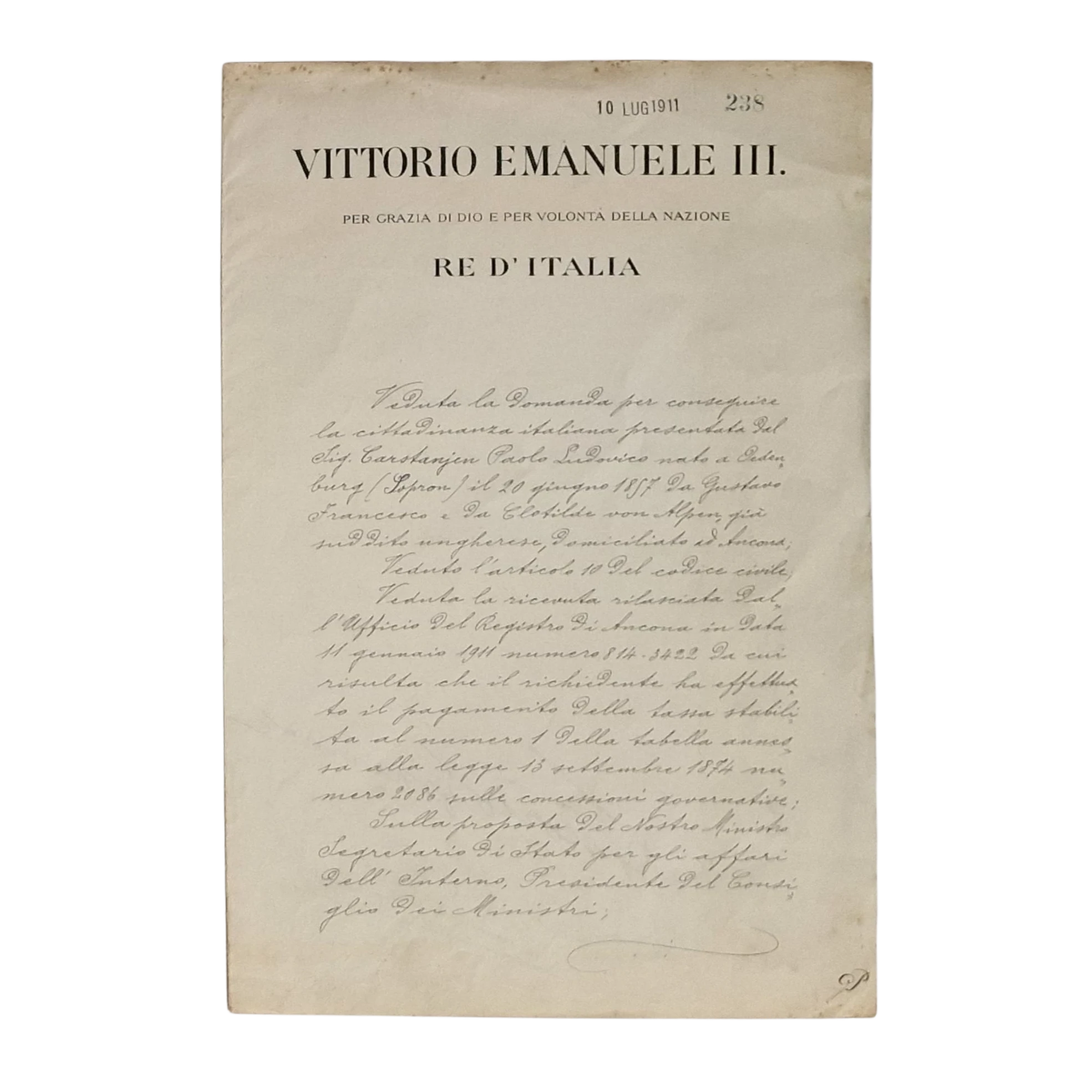
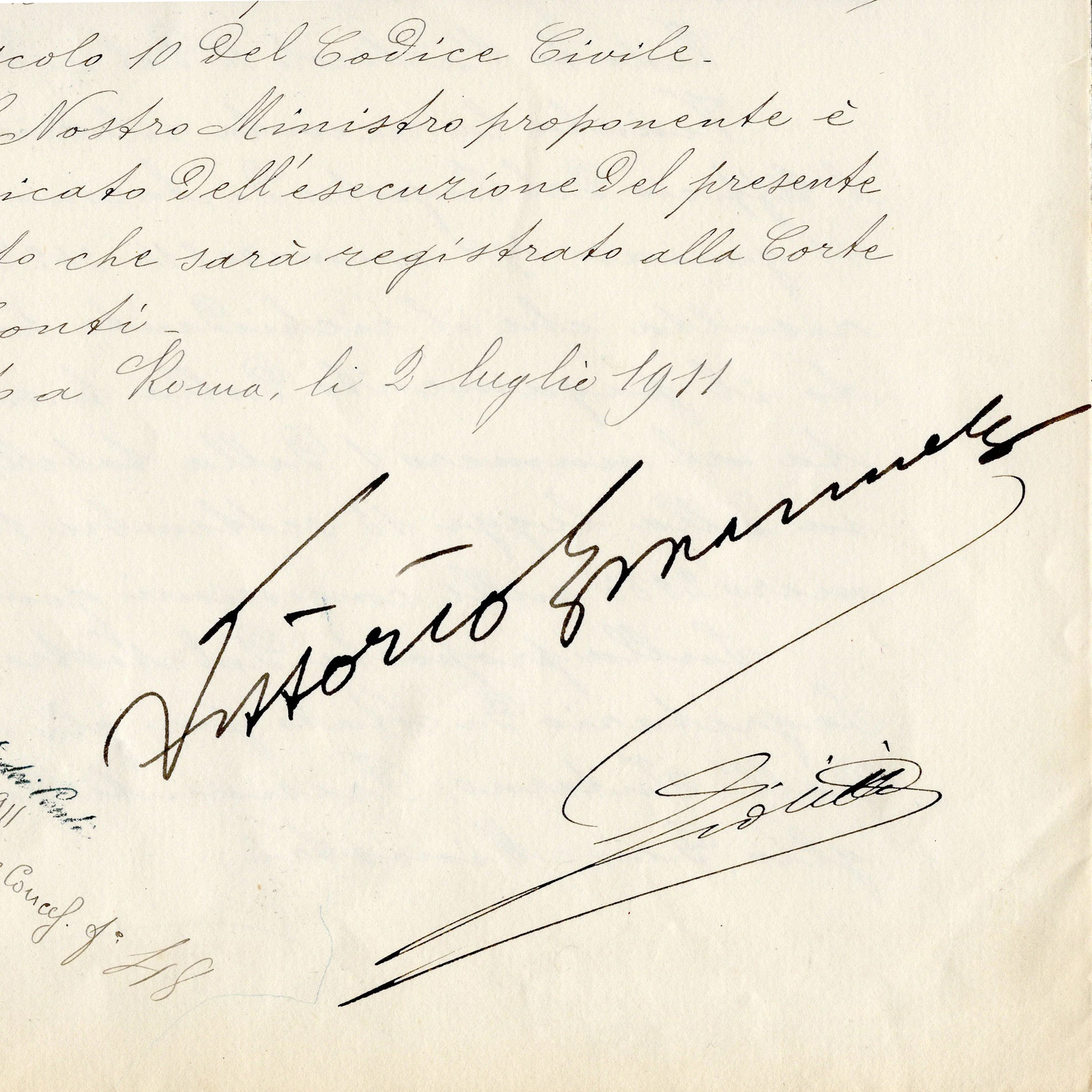
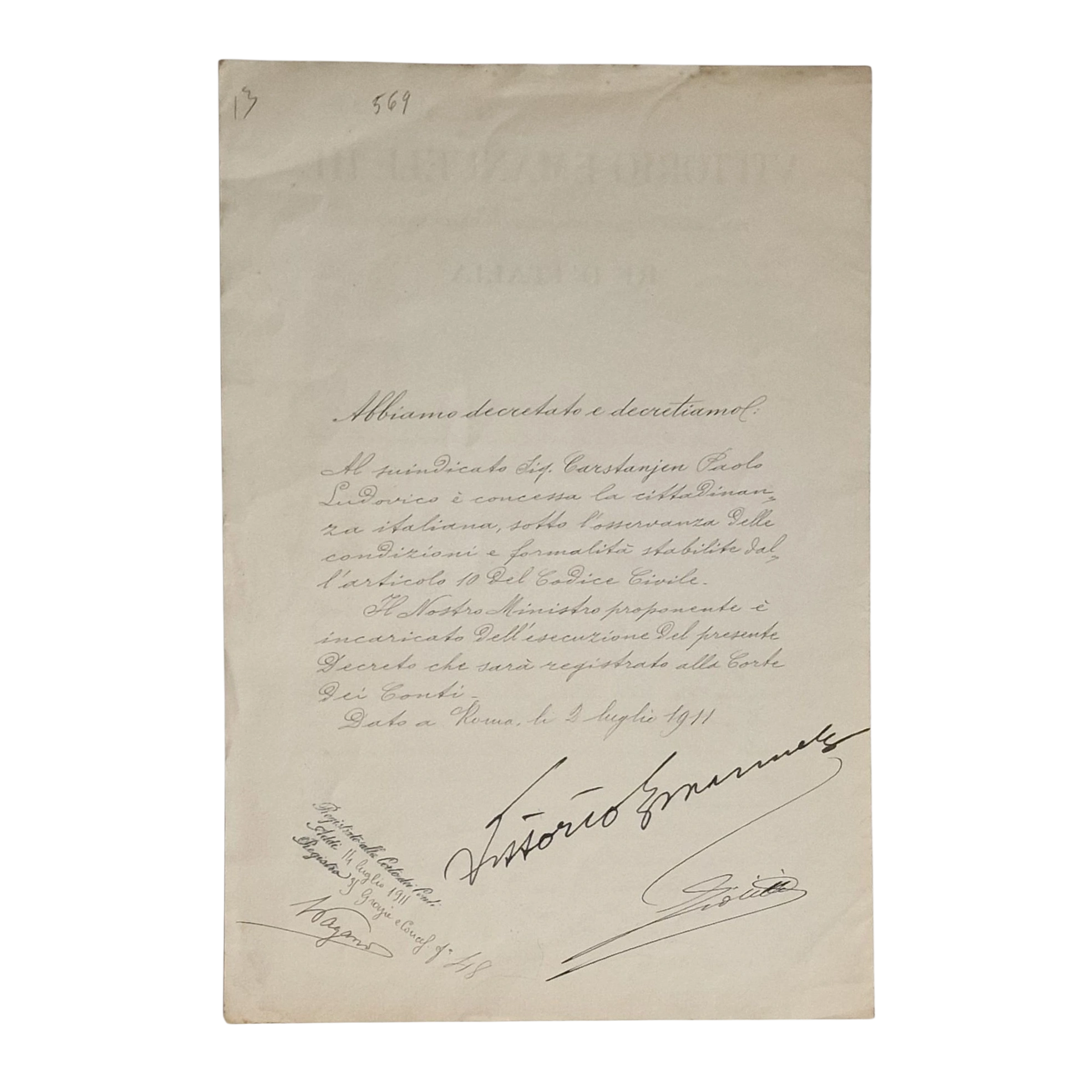
VITTORIO EMANUELE III BIOGRAPHY :
Victor Emmanuel III (Vittorio Emanuele Ferdinando Maria Gennaro di Savoia; Italian: Vittorio Emanuele III, Albanian: Viktor Emanueli III; 11 November 1869 – 28 December 1947) reigned as King of Italy from 29 July 1900 until his abdication on 9 May 1946. He also reigned as Emperor of Ethiopia (1936–1941) and King of the Albanians (1939–1943). During his reign of nearly 46 years, which began after the assassination of his father Umberto I, the Kingdom of Italy became involved in two world wars. His reign also encompassed the birth, rise, and fall of Italian Fascism and its regime. During the First World War, Victor Emmanuel III accepted the resignation of Prime Minister Paolo Boselli and named Vittorio Emanuele Orlando (the premier of victory) in his place. Following the March on Rome, he appointed Benito Mussolini as Prime Minister, later deposing him in 1943 during the Allied invasion of Italy during the Second World War. Victor Emmanuel abdicated his throne in 1946 in favour of his son Umberto II, hoping to strengthen support for the monarchy against an ultimately successful referendum to abolish it. He then went into exile to Alexandria, Egypt, where he died and was buried the following year in St. Catherine’s Cathedral of Alexandria. In 2017, his remains were returned to rest in Italy, following an agreement between Italian President Sergio Mattarella and Egyptian President Abdel Fattah el-Sisi. Victor Emmanuel was also called by some Italians Sciaboletta (“little saber”), due to his height of 1.53 m (5 ft 0 in), and il Re soldato (the Soldier King), for having led his country during both world wars.
GIOVANNI GIOLITTI BIOGRAPHY :
Giovanni Giolitti (27 October 1842 – 17 July 1928) was an Italian statesman. He was the prime minister of Italy five times between 1892 and 1921. He is the longest-serving democratically elected prime minister in Italian history, and the second-longest serving overall after Benito Mussolini. A prominent leader of the Historical Left and the Liberals, he is widely considered one of the most wealthy, powerful and important politicians in Italian history; due to his dominant position in Italian politics, Giolitti was accused by critics of being an authoritarian leader and a parliamentary dictator. Giolitti was a master in the political art of trasformismo, the method of making a flexible, centrist coalition of government which isolated the extremes of the Left and the Right in Italian politics after the unification. Under his influence, the Liberals did not develop as a structured party and were a series of informal personal groupings with no formal links to political constituencies. The period between the start of the 20th century and the start of World War I, when he was prime minister and Minister of the Interior from 1901 to 1914, with only brief interruptions, is often referred to as the “Giolittian Era”. A liberal with strong ethical concerns, Giolitti’s periods in office were notable for the passage of a wide range of progressive social reforms, together with the enactment of several policies of government intervention. Besides putting in place several tariffs, subsidies, and government projects, Giolitti also nationalized the private telephone and railroad operators. Liberal proponents of free trade criticized the “Giolittian System”, although Giolitti himself saw the development of the national economy as essential in the production of wealth. The primary focus of Giolittian politics was to rule from the centre with slight and well-controlled fluctuations between conservatism and progressivism, trying to preserve the institutions and the existing social order. Right-wing critics like Luigi Albertini considered him a socialist due to the courting of socialist and leftist votes in parliament in exchange for political favours, while left-wing critics like Gaetano Salvemini accused him of being a corrupt politician and of winning elections with the support of criminals. Nonetheless, his highly complex legacy continues to stimulate intense debate among writers and historians.